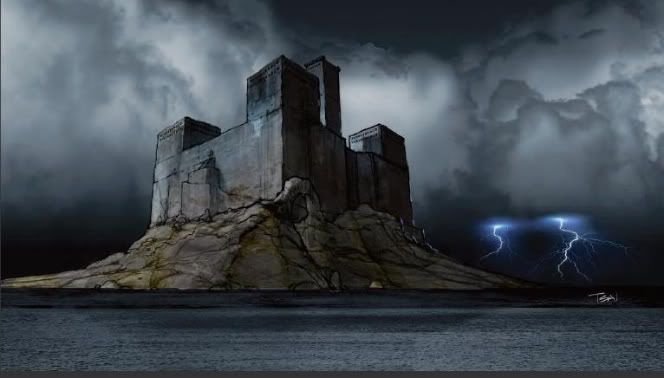
People tend to feel trapped when faced with insurmountable problems and challenges. This feeling, though, is magnified in Gothic literature. This is done by the use of an imperishable foe as well as a walled enclosure. One such example of this is: “Of what materials was I made that I could thus resist so many shocks, which, like the turning of the wheel, continually renewed the torture? But I was doomed to live and in two months found myself as awaking from a dream, in a prison, stretched on a wretched bed, surrounded by jailers, turnkeys, bolts, and all the miserable apparatus of a dungeon.” (pg 217 – 218, Frankenstein by Marry Shelley) This excerpt shows how a walled enclosure of no escape magnified the misery of Dr. Frankenstein.
Showing posts with label Shahani. Show all posts
Thursday, April 21, 2011
Gothic Traditions
Logic Vs. Emotions in Frankenstein
“While I still hung over her in the agony of despair, I happened to look up. The windows of the room had before been darkened, and I felt a kind of panic on seeing the pale yellow light of the moon illuminate the chamber. The shutters had been thrown back, and with a sensation of horror not to be described, I saw at the open window a figure the most hideous and abhorred. A grin was on the face of the monster; he seemed to jeer, as with his fiendish finger he pointed towards the corpse of my wife. I rushed towards the window, and drawing a pistol from my bosom, fired; but he eluded me, leaped from his station, and running with the swiftness of lightning, plunged into the lake.”(242) The afore quote was from the later part of Frankenstein by Marry Shelley. It depicted the train of thought of Dr. Frankenstein upon finding his bride murdered. This shows two instances of illogicality on his part. Dr. Frankenstein expected the monster to leave his new wife alone, but to come after him. This was illogical because the monster had attacked three of Frankenstein’s loved ones before, all in an attempt to upset Frankenstein. Hence, believing this instant would be different was absurd. The second illogical act was trying to shoot the monster from the window. Frankenstein’s creature had eluded him before so it was an act of emotion when this feat was attempted.
Logic Vs. Emotion
Gothic literature commonly makes us overwhelmed with unpleasant emotions that can relate to those of depression. It also, however, is designed to make us think. Reading this type of literature, literature that plays on our emotions while being guided with realities, exercises our minds helping us to examine the situations in our lives assuring that we are doing so logically and not being ruled by our emotions.
Saturday, April 9, 2011
Obsession With Death, in Frankenstein
Obsession With Death ~> Gothic Literature
Gothic literature, as we know, depicts the uncanny or illogical. It shows us things in an eerie way. According to Sigmund Freud, we all experience this uncanny feeling in relation to death. He brings out that the fear of the dead or death is an experience that we have had from the beginning of civilization. Freud attributes this feeling to our insufficient scientific knowledge about death and the strength of our original emotions in regard to death. This reluctance to accept our state of mortality accounts for the ease in summoning such emotions at the slightest provocation. Gothic literature, he claims, can meld with our intolerable view of death by portraying things in fiction as they would be if they occurred in real life, thus it would coincide with realties of which we are familiar. It could also stray completely from the realities of life, but must stay that way in order to be successful in conjuring some emotional response. Gothic literature, thus, feeds on our fear to make us believe in a world that does not exist.
Subscribe to:
Posts (Atom)